 English
 русский
 Español
 عربى
2026/11/06
Industry News

Nine times out of ten, a lab instrument purchase starts with a price comparison and ends with a service problem. If you are sourcing analytical instruments from a factory, the first thing worth checking is not the quotation but the calibration file behind the sample unit. A visible spectrophotometer and a UV-Vis model can look nearly identical in a brochure and behave very differently on a bench at 340 nm. We have manufactured laboratory instruments since 1988, and the pattern we see is consistent: buyers who audit documentation first, and price second, get instruments that stay in service for a decade.
This guide covers what an analytical instruments factory actually produces, which specifications decide whether a model suits your work, and the questions that separate a real manufacturing partner from a trading desk with a catalogue.
Content
Broadly, the category covers instruments that measure a property of a sample rather than simply prepare it: spectrophotometers, pH meters, balances, and the detection platforms used in food safety screening, environmental monitoring and enzyme-linked immunosorbent assay work. Sample preparation equipment — centrifuges, mixers, water baths, metal baths — sits alongside them, and a factory that builds both sides of that bench can usually supply a lab in a single order with a single warranty contact.
That breadth matters more than it sounds. When a spectrophotometer, its cuvettes, its racks and its sample prep sit under one supplier, a failed reading has one accountable party instead of three who can each blame the other's component.
Where factories differ is in how much of the instrument they actually make. Ask whether the optical bench, the detector board and the firmware are developed in-house or assembled from third-party modules. An in-house design can be recalibrated and supported years later; a bought-in module often cannot.
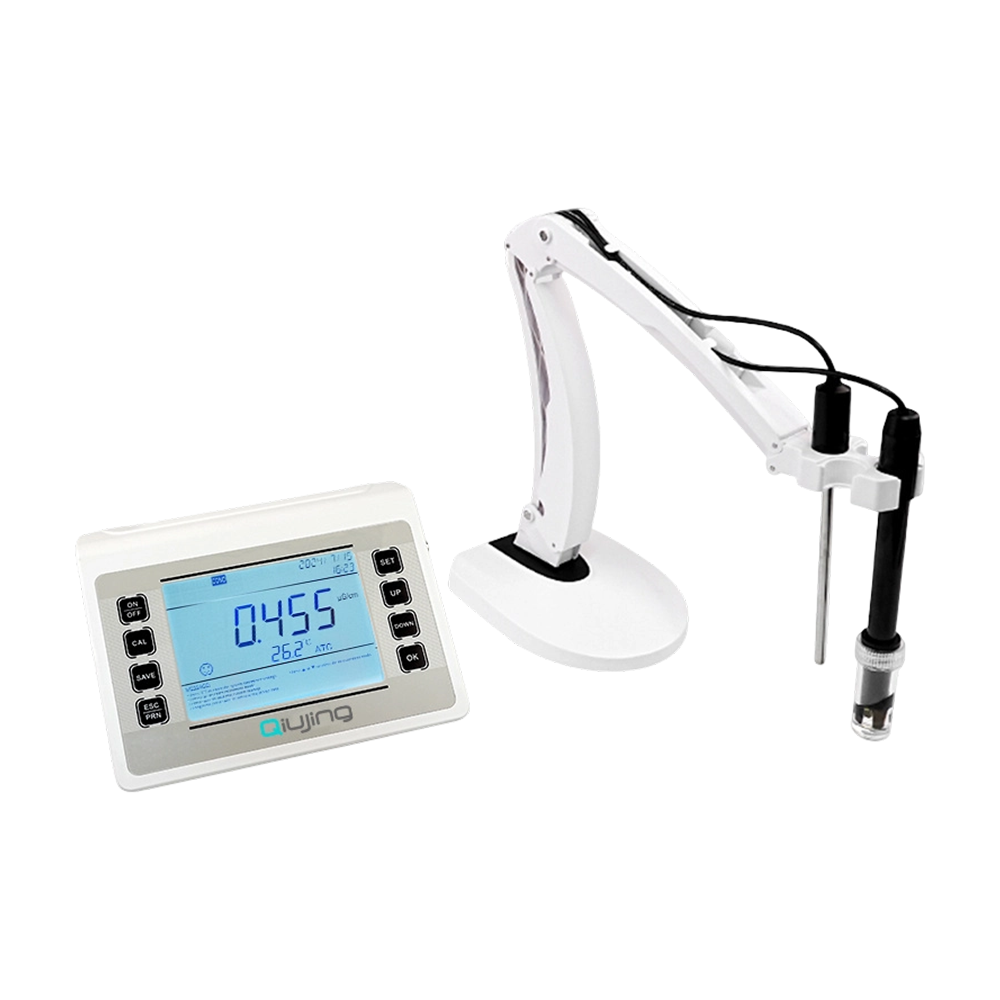
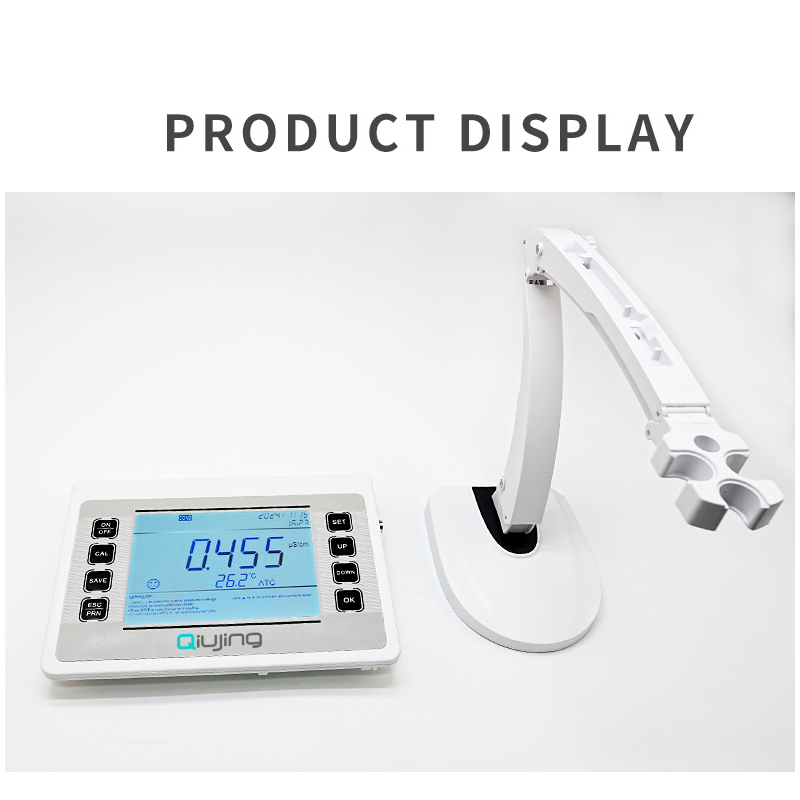 Qiujing P902 Conductivity Measuring Instrument for Laboratory Water AnalysisFor laboratories comparing build and support details, this meter covers conductivity, resistivity, TDS, salinity, and temperature on a 6.5-inch LED screen.View Product →
Most quotation errors are specification errors, not price errors. The table below lists the checkpoints buyers most often skip, and the practical consequence of getting them wrong.
| Instrument | Spec that decides fitness | Typical configuration range | Risk if ignored |
|---|---|---|---|
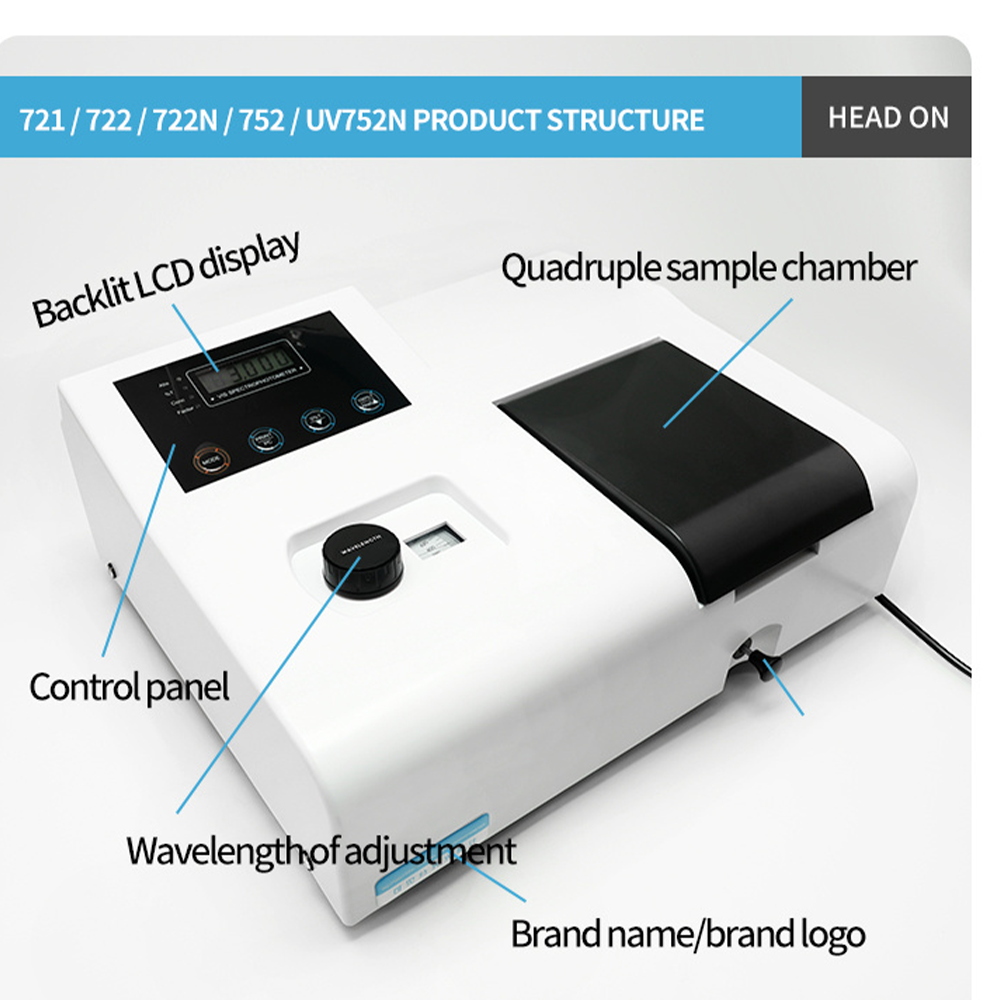
| Visible spectrophotometer | Bandpass width, lamp type, manual vs automatic wavelength | Manual wavelength; imported tungsten lamp options | Absorbance drift on coloured reagents; re-reads become routine |
| UV-Vis spectrophotometer | Wavelength accuracy, stray light, single vs double beam | 2 nm or 4 nm automatic; proportional double-beam 1.8 nm / 2 nm | Low-absorbance results near the noise floor; QC failures at 340 nm |
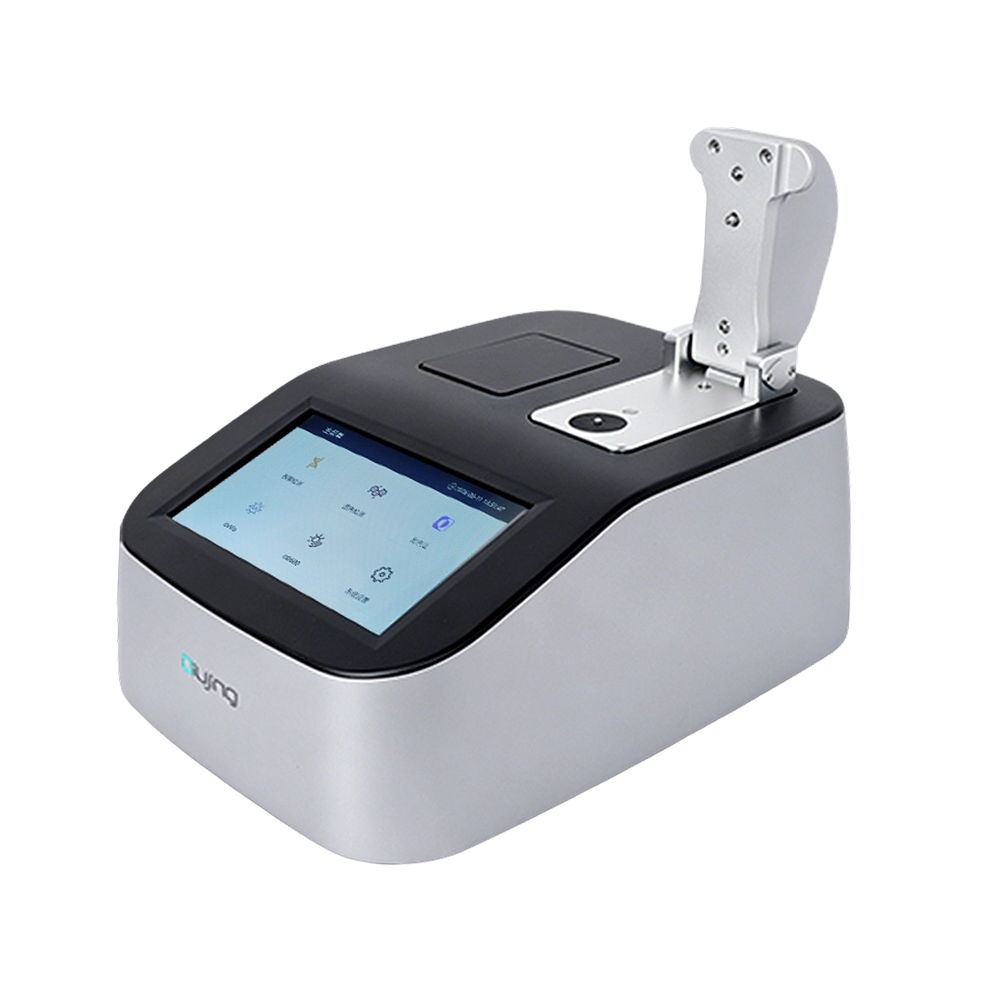
| Ultra-micro spectrophotometer | Minimum sample volume, light source stability | 1 nm resolution with Xenon flash lamp | Nucleic acid work needs volumes your cuvette model cannot accept |
| pH meter | Ingress protection, electrode compatibility, data output | IP54 dust and splash protection; Bluetooth transmission and printing | Drift and screen fogging in cold rooms or wet prep areas |
| Laboratory balance | Readability versus capacity | 0.1 g / 0.01 g / 0.001 g; 0.0001 g to 0.001 g precision series | Buying 1 mg readability for work that needs 0.1 mg, or overpaying for precision you never use |
| Food safety and ELISA platforms | Touch interface, channel count, storage and printing | Touch-screen models for food testing, environmental monitoring and ELISA | Results recorded by hand; no audit trail when a customer asks for raw data |
A practical tolerance rule: for teaching labs and routine screening, a 4 nm bandpass is usually generous enough. For method development, stability studies or anything that will be audited, insist on 2 nm or better and a double-beam design if your reference and sample drift independently.
China's laboratory instrument sector has moved well past the copy-and-assemble stage in several niches. Our own company, Shanghai Qiujing Biochemical Reagent & Instrument Co., Ltd., registered its English and Chinese trademarks in 1992 and has concentrated on precision liquid handling and laboratory instruments since then, with CE marking and an ISO 13485 quality system covering incoming materials, production and finished-goods inspection. Several technical patents sit behind the pipette line, and the analytical and preparation instrument ranges were built on the same design and testing resources. You can read the fuller history on our company profile page.
What that means for a buyer is narrower than a marketing page suggests: a factory with an established quality system usually produces documentation on request — calibration certificates, test reports, material declarations — without a two-week delay. A factory without one tends to answer documentation questions with photographs of the instrument instead.
Instruments fail projects for reasons that have nothing to do with build quality. A food safety screening lab that buys a research-grade double-beam spectrophotometer has bought sensitivity it will never use; a molecular biology lab that buys a visible-only model has bought a bench ornament.
These workflows are repetitive, high-volume and often run by rotating staff. Prioritise a touch interface, large internal storage and direct printing, because the value is in the record, not the reading. If the same bench also runs ELISA plates, a platform that covers both reduces training load.
Here the decision is usually between a cuvette spectrophotometer and an ultra-micro unit, and the tiebreaker is sample volume. Check whether the cell-density and automatic-reading functions you need are native or require a separate module, and confirm that the cuvette holder format matches the tubes your team already uses.
Robustness beats resolution. A 4 nm manual-wavelength spectrophotometer with a tungsten lamp that any local technician can replace will outlast a high-specification unit nobody dares to service.
 Qiujing QJ-cell Automatic Cell Counter for Laboratory Cell CountingFor cell culture labs seeking efficient counting, this system uses deep-learning recognition, 2-second counting, and a no-consumables design to reduce manual microscopy.View Product →
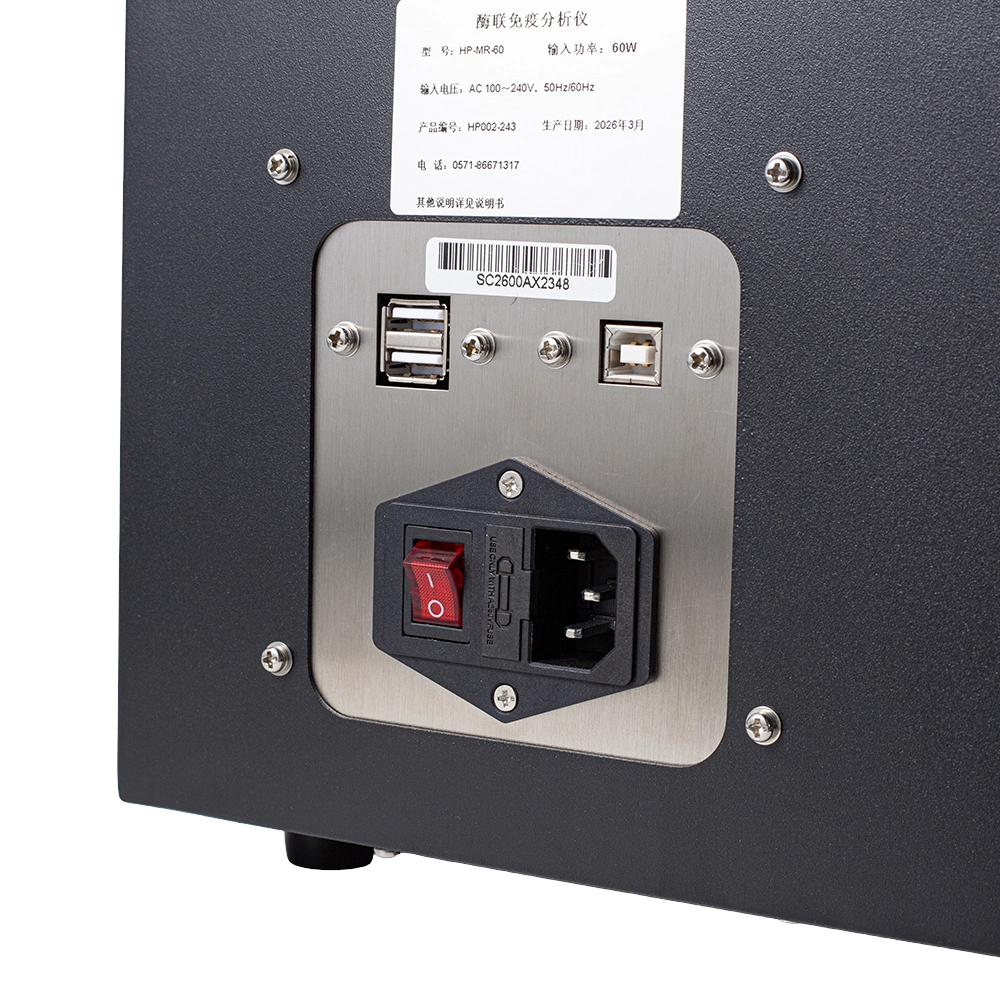 Qiujing QJ-MR-60 Touch-Screen ELISA Analyzer for Laboratory DetectionFor labs weighing robustness and specifications, this ELISA analyzer offers a 7-inch touch screen, 340–750 nm range, and 96-well plate reading.View Product →
Whether you visit in person or audit remotely, the same short list applies. Get written answers, not verbal assurances.
A quote that is 15% cheaper and lacks a spare-lamp supply chain is not cheaper. Lamps age, electrodes drift, and a single week of downtime on a food safety bench usually costs more than the discount that caused it. When you compare bids, put three numbers side by side: purchase price, the cost of consumables over five years, and the cost of one working day lost. The third figure is the one buyers underestimate.
Shipping and compliance deserve the same attention. Instruments exported to different markets carry different plug, labelling and documentation requirements, and a factory that already ships internationally will have that paperwork ready rather than improvised. If you are still building your evaluation criteria, our buyer guide to laboratory instrument selection sets out a comparable scoring method.
Usually, but only after you equalise the comparison. Add freight, duties, calibration at destination and the cost of spares to both offers. A factory price that excludes a local calibration visit is not the lower number you think it is.
Only if its product range genuinely overlaps. Look for a manufacturer that builds both measurement instruments and sample preparation equipment, since that is what allows one purchase order, one warranty channel and one set of consumables.
At least a test or calibration record for the specific serial number, an operation manual in your required language, a declaration of the quality system under which it was built, and a parts list identifying user-replaceable components.
Ask for the acceptance test method, not just the headline figure. Wavelength accuracy quoted without a reference standard and a test condition is a marketing number; quoted with both, it is a specification.
An analytical instrument is a five-to-ten-year commitment to a supplier's ability to calibrate, document and repair. Decide what accuracy your method genuinely requires, confirm the quality system behind the model, and check that spares and service reach your site. If you would like to test those three questions against a real factory, our team is glad to walk you through the test records, certificates and consumable lists behind each analytical model before you place an order.



Copyright © Shanghai Qiujing Biochemical Reagent & Instrument Co., Ltd. All Rights Reserved. OEM/ODM Laboratory Equipment Manufacturer Laboratory Instruments Factory
