 English
 русский
 Español
 عربى
2026/11/06
Industry News

The first equipment list in a new laboratory is usually written backwards. Someone opens a vendor catalogue at page one and starts ticking boxes; six months later the pipettes do not fit the plates, the centrifuge cannot spin the tubes the protocol specifies, and a slice of the budget is sitting in a cupboard.
A more reliable sequence is workflow first, specification second, supplier support third. Laboratory equipment is less a product category than a set of answers to questions your protocol already asks: what volume, what g-force, what temperature, what tolerance — and who recalibrates the instrument when it drifts.
Content
Vendors, distributors and standards documents use the phrase differently. In practice, most purchasing lists break into six groups, and mapping your list to them before comparing prices is worth the twenty minutes it takes, because equipment in different groups fails in different ways.
| Workflow stage | Equipment examples | First specification to verify |
|---|---|---|
| Liquid handling | Single-channel, 8- and 12-channel micropipettes, repetitive steppers, large-volume pipettes | Accuracy and coefficient of variation at the smallest volume you dispense |
| Separation | Benchtop high-speed and low-speed centrifuges, mini centrifuges, ultracentrifuge consumables | Maximum RCF and rotor or tube compatibility |
| Temperature control | Metal baths, dry block heaters, cooling plates, water baths, microplate incubator shakers | Uniformity across the block, not just the set point |
| Mixing and stirring | Vortex mixers, roller and rotary mixers, orbital and rocking shakers, magnetic stirrers | Speed range and motion type |
| Measurement | Balances, pH meters, visible and UV-Vis spectrophotometers | Readability, resolution and wavelength accuracy |
| Sample prep and consumables | Cell counting slides, Petri dishes, filtration devices, syringe filters, pipette stands | Sterility status, material grade and adsorption behaviour |
The last group deserves its own budget line. Consumables and sample preparation items sit closest to daily running cost, and the cheap substitution that saves a few percent per box often shows up later as inconsistent counts or lost protein. If this is your first comparison round, our buyer guide on choosing laboratory instruments walks through the evaluation order step by step.
Two laboratories can buy the same model and get very different results, because the deciding variable is rarely the name on the box. It is the fit between the instrument and the protocol you run every day.
Volume range decides almost everything. A 100 µL pipette that performs well in mid-range may be noticeably less precise near 10 µL, so ask for accuracy and repeatability at the smallest volume you actually dispense rather than the largest number on the datasheet. Single-channel covers most tube work; 8- and 12-channel formats pay for themselves as soon as microplates enter the workflow. Autoclavability matters when the same instruments move between nucleic acid and cell culture work, since fully autoclavable models avoid the partial disassembly that quietly shortens service life.
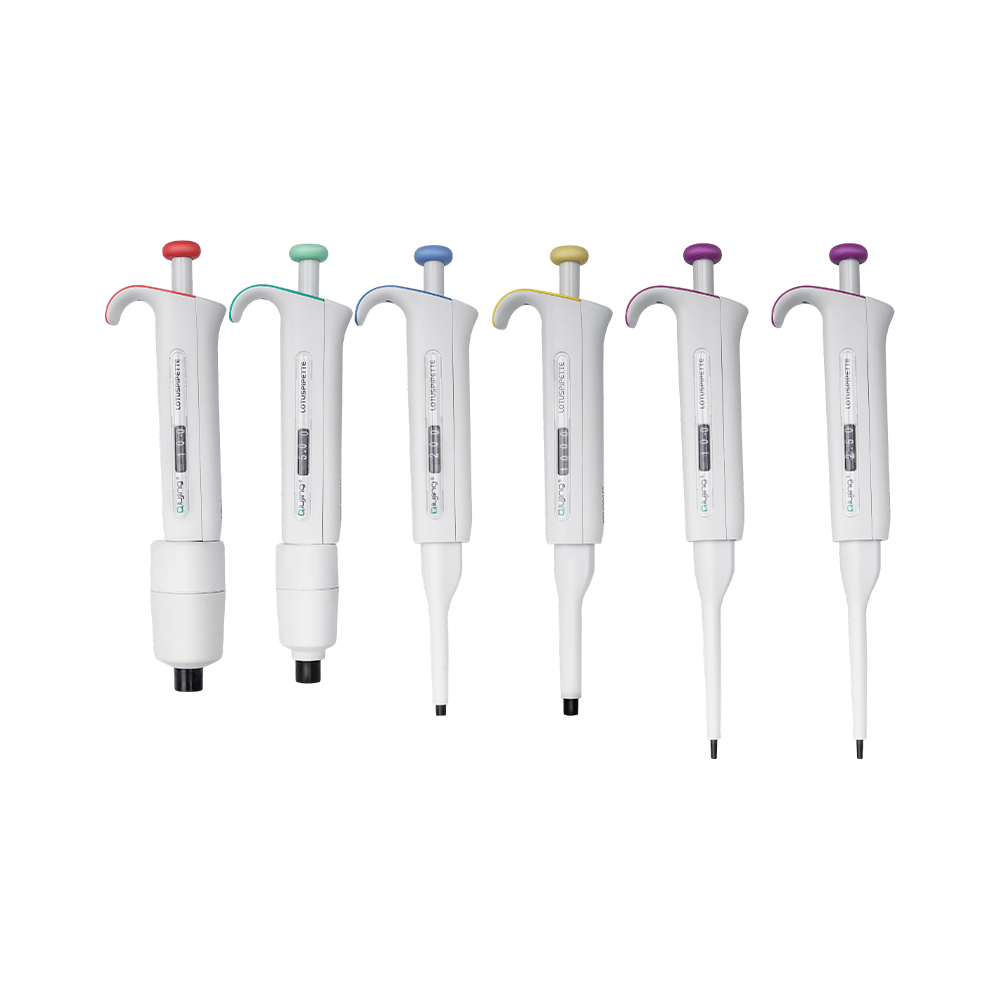 Qiujing Lotus Single-Channel Fully Autoclavable MicropipetteA single-channel micropipette with nine volume models and full-body autoclavability without disassembly, suited to frequent tube work and shared nucleic acid and cell culture benches.View Product →
Start from the tube, not the rotor. A benchtop low-speed centrifuge that accepts 15 mL and 50 mL conical tubes covers most cell culture routines, while micro-high-speed and refrigerated units are for nucleic acid and protein work where temperature and g-force both matter. Mini centrifuges are inexpensive enough to place one per bench and remove a surprising amount of walking. Compare maximum RCF rather than revolutions per minute, because rpm alone says nothing without the rotor radius.
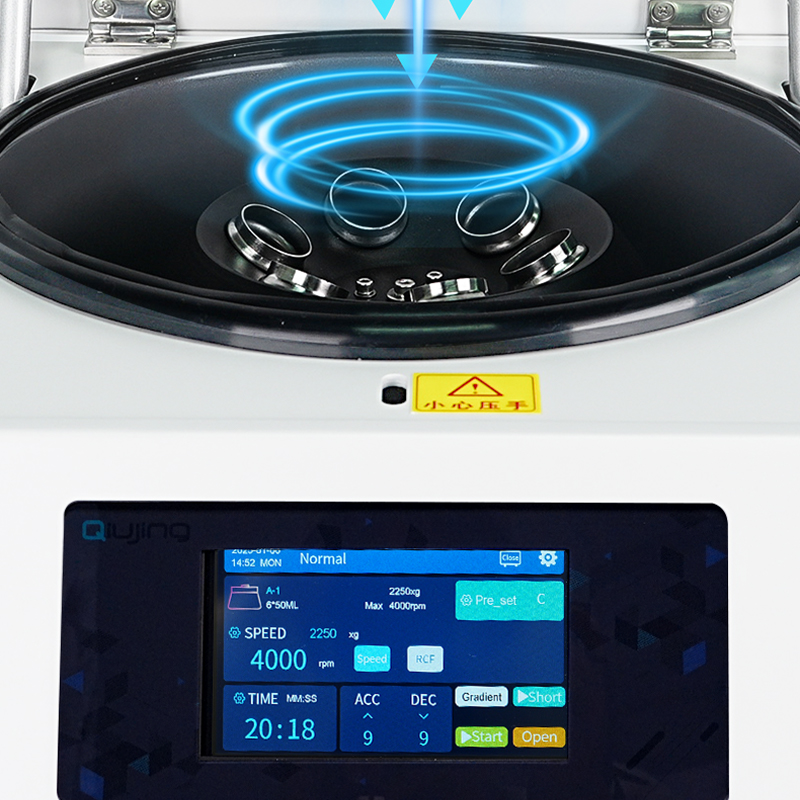 Qiujing Serene 2-040NT Benchtop Low-Speed CentrifugeA compact 4000 rpm benchtop centrifuge with 6×50 mL capacity, multiple rotor options, and safety protections for serum, plasma, and routine clinical separations.View Product →
Block heaters and metal baths hold temperature more evenly than water baths and need no refilling, while water baths still win for large vessels and gentle incubation. For balances, 0.001 g readability covers general weighing; 0.0001 g analytical work demands a stable bench, draft protection and warm-up discipline, and buying the finer balance without the bench is a familiar and expensive mistake. pH meters and spectrophotometers deserve a look at ingress protection and wavelength accuracy before anything else, because those two numbers decide whether the instrument survives a wet bench and an audit.
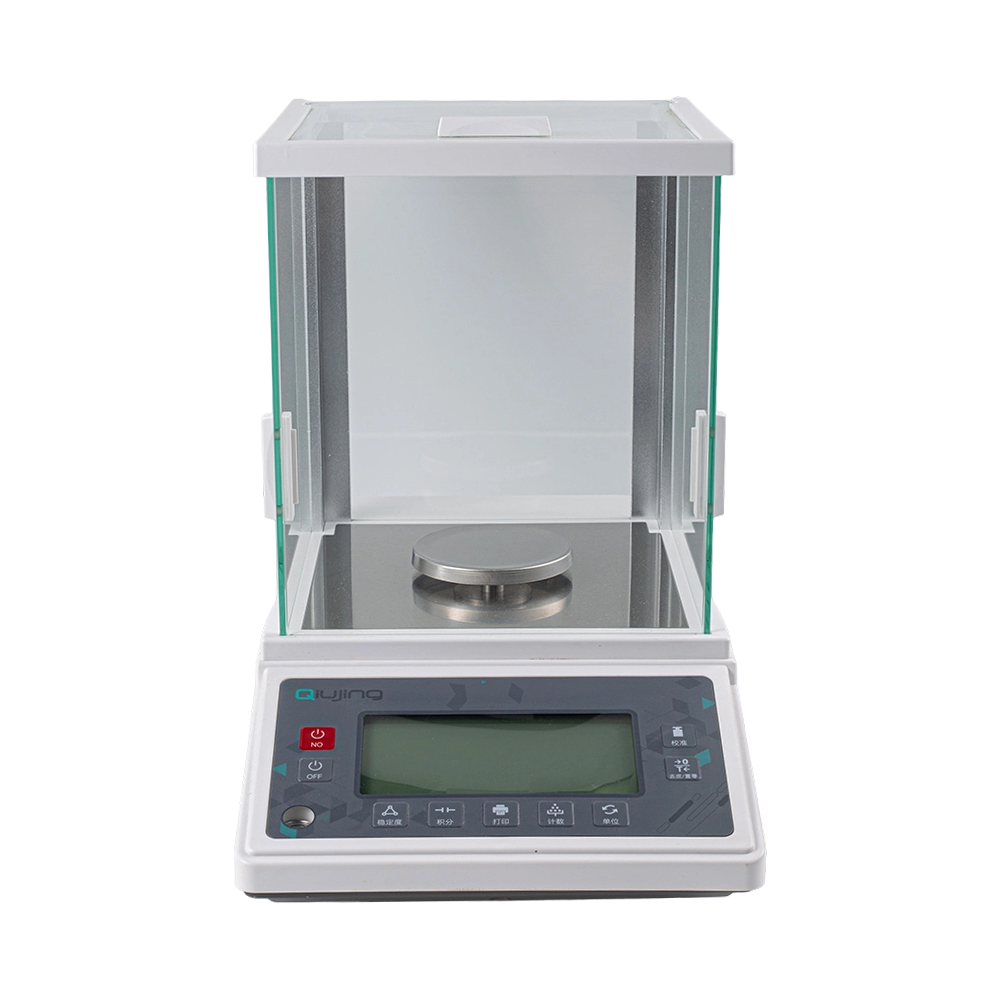 Qiujing Precise Series 0.1 mg Laboratory BalanceAn electromagnetic-force balance with 0.0001 g/0.001 g readability, 3-second stabilization, piece counting, and RS232/USB data transfer for routine lab weighing.View Product →
Most of a datasheet is neutral information. A handful of numbers decide whether the instrument suits the work and whether it still suits it after three years.
| Specification | Where it appears | What it changes in practice |
|---|---|---|
| Accuracy and CV at minimum volume | Micropipette data | Whether low-volume transfers are reproducible at all |
| Maximum RCF | Centrifuge data | Which tubes and protocols are physically possible |
| Readability, 0.001 g or 0.0001 g | Balance series | Bench requirements, stabilisation time and price tier |
| Autoclavability, full or partial | Pipettes and accessories | Contamination control and realistic service life |
| Wavelength accuracy and stray light | Spectrophotometers | Whether absorbance data survive method transfer |
| Ingress protection rating | pH meters and field instruments | Survival on a wet bench; IP54 is splash-resistant, not waterproof |
Documentation belongs on the same list. Manufacturers with a functioning quality system can usually supply CE marking, ISO 13485 certification and calibration records without a special request, and that paperwork often decides a tender faster than a discount. Shanghai Qiujing, for example, has been building pipettes and laboratory instruments since 1988, with quality control covering incoming materials through to final testing — the kind of evidence a procurement committee asks for after the demo.
These are the issues that turn a good quotation into a difficult year. None of them take long to check; all of them are cheaper to fix before delivery than after.
A short written request covering these five points usually separates suppliers who simply resell from those who actually support the instrument afterwards.
Sometimes, mainly through service contracts and simplified spares. But equipment categories differ enough that a single-brand policy usually costs more in the temperature-control and separation groups than it saves in administration. Standardise formats, not logos.
Common practice is every six to twelve months for routine use, more often for high-throughput or regulated work, and immediately after any drop or repair. Gravimetric checks in-house between formal calibrations catch drift early.
If instruments move between nucleic acid work and cell culture, yes. Partial autoclavability means disassembly before every cycle, which in practice means it happens less often than the SOP says.
Single-channel pipettes across three or four volume ranges, one multichannel for plates, a mini centrifuge plus one benchtop unit, a vortex mixer, a block heater or water bath, a balance matched to your weighing needs, and a pH meter — then consumables sized to actual monthly use rather than annual optimism.
Equipment lists age quickly, so build them around workflows that will not change: volume range, g-force, temperature uniformity, readability. Get those four right and the catalogue becomes a shortlist instead of a gamble.
If you would rather start from applications than from model numbers, browse the laboratory solutions collection to see how pipetting, instruments and consumables fit together in practice.



Copyright © Shanghai Qiujing Biochemical Reagent & Instrument Co., Ltd. All Rights Reserved. OEM/ODM Laboratory Equipment Manufacturer Laboratory Instruments Factory
