 English
 русский
 Español
 عربى

OEM/ODM Analytical Instruments: How Distributors Vet a Manufacturing Partner
A distributor's first OEM order rarely fails on price. It fails in month eighteen, when the third production batch drifts off the wavelength tolerance agreed on the sample unit and no engineer is left to pick up the phone. The distance between a good sample and a repeatable production run is where most OEM/ODM analytical instrument programmes are quietly lost.
The short version, before the detail: vet four things before signing — vertical R&D on the parts that actually measure, a traceable quality system backed by ISO 13485 and CE, the real depth of customization (optics, firmware, labeling), and direct engineering access after delivery. MOQ, packaging and lead time are commercial negotiation; those four are not.
Content
- 1 OEM and ODM Are Not Interchangeable on a Purchase Order
- 2 R&D Depth Is the First Filter, Not the Datasheet
- 3 Quality Evidence: ISO 13485, CE and Batch Traceability
- 4 Customization Depth: Where Analytical Instruments Differ from Consumables
- 5 Liquid Handling: The Part of the Scope Buyers Forget to Specify
- 6 Application Fit: Food Safety, Environmental Monitoring and ELISA
- 7 A Distributor's Checklist Before Signing
- 8 Frequently Asked Questions
OEM and ODM Are Not Interchangeable on a Purchase Order
The two terms are often printed as one label, but they place the validation burden in different places. In OEM work, the buyer's specification defines the instrument and the manufacturer builds, tests and validates it. In ODM work, the manufacturer's existing platform is adapted — branding, interface language, packaging, minor software changes — and the buyer resells it largely as designed.
That difference shows up first in certification and change control. A partner whose quality system supports OEM documentation can often issue test records and conformity documents under your brand. An ODM arrangement normally keeps the CE marking with the manufacturer, and your differentiation stays cosmetic. Establishing which arrangement your purchase order actually describes is worth doing before the price conversation, not after.
| Decision point | OEM | ODM |
|---|---|---|
| Who owns the design | Buyer's specification, built to drawing | Manufacturer's platform, adapted for your brand |
| Starting input | Requirement document and approved sample | Existing catalog instrument |
| Typical change scope | Optics, firmware, enclosure, connectors, labeling | Logo, label, manual language, packaging |
| Certification route | Documents can be issued in the buyer's name where the QMS supports it | Manufacturer's CE marking is retained |
| Time to first shipment | Longer: tooling, validation, retained samples | Shorter: branding, then ship |
| Main risk | Over-specifying a design the factory cannot validate | Weak differentiation in a crowded catalog |
R&D Depth Is the First Filter, Not the Datasheet
A datasheet describes what an instrument does the day it ships. R&D depth decides whether it still does it in year three. The practical test is simple: does the manufacturer own the measurement-critical parts of the design, or buy them in and assemble around them?
Signals of real in-house capability
- Detection and optical modules designed in-house, with a documented calibration routine rather than a supplier's default.
- Firmware and menu architecture written by the same team that owns the hardware, so a change request has one owner.
- Mechanical design of the sample path: cell holders, cuvette positioning, plate carriers, thermal blocks.
- In-house tooling for enclosures and precision parts, which shortens the loop between a distributor's request and a validated change.
- A design history file you can audit, including the reason each revision was made.
Questions that separate a manufacturer from an assembler
Ask which components changed between the sample you approved and the version in current production. Ask who wrote the calibration algorithm and whether it is shared across the instrument family. Ask what happens when a critical supplier changes a part specification. A vertical manufacturer replies with a document number and a date. An assembler replies with reassurance and a delivery estimate.
Quality Evidence: ISO 13485, CE and Batch Traceability
For distributors selling into regulated laboratories, the quality documentation is part of the product, not paperwork attached to it. ISO 13485 certification indicates a quality system designed for instruments and devices, and CE marking signals conformity for the European market. What matters is scope: incoming materials, production and final inspection should all be covered, not only the finished unit.
- Certificate scope — does it name the product categories you intend to buy?
- Traceability — can a serial number be linked to test data and to the component lots used in that build?
- Calibration records — do verification data travel with the unit for the parameters you sell on?
- Non-conformance handling — how is a failed batch quarantined, and how are you notified?
- Documentation language — English labels and destination-market documents prepared in advance, not translated after the order.
A useful habit: request the same documentation pack for a repeat order as for the first. Partners with a genuine system produce it in a day; the rest explain why the file is not available this week.
Customization Depth: Where Analytical Instruments Differ from Consumables
Customization in analytical instruments comes in three layers, and they are priced very differently.
- Cosmetic: logo, enclosure color, label, manual language. Usually a matter of weeks.
- Functional: wavelength range, resolution, cuvette or plate format, connectivity, data output. Months, because the change needs re-validation.
- Method-level: application presets for a specific assay, report templates, software workflow. Feasible only if the firmware architecture allows it.
Optical instruments show this clearly. A spectrophotometer family covering manual 4/5 nm, automatic 2/4 nm, proportional double-beam and 1 nm ultra-micro formats shares a common optical and firmware base, so moving a distributor's specification into a different resolution class is largely a configuration exercise rather than a redesign.
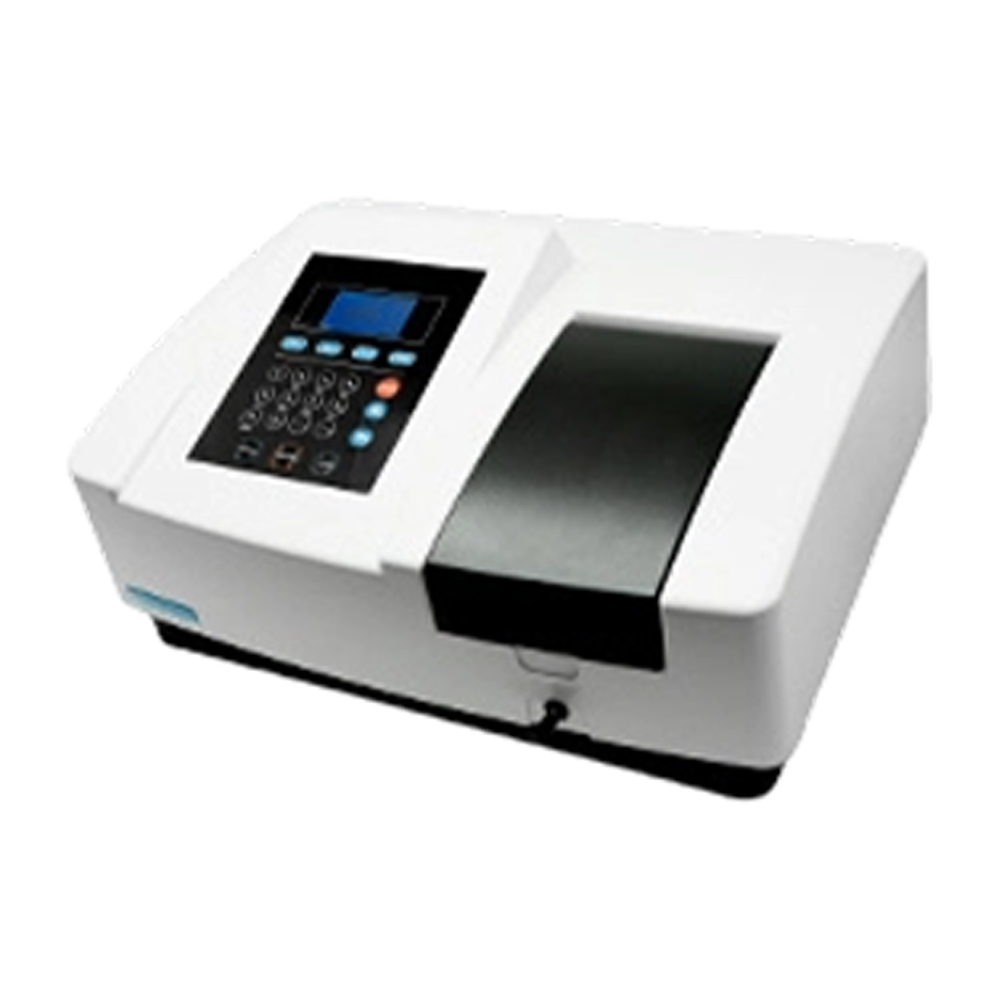 Qiujing UV754N/UV755B UV-Visible Spectrophotometer with Automatic Wavelength DriveA two-model laboratory UV-Vis instrument with automatic wavelength drive, large sample room, USB and optional software; suits resolution-class specification discussions.View Product →
What a buyer should refuse is a "custom firmware" that turns out to be a renamed menu, or a resolution claim borrowed from an unrelated hardware platform. Ask which layer your request falls into, in writing, with acceptance criteria attached.
Liquid Handling: The Part of the Scope Buyers Forget to Specify
Analytical results begin before the sample reaches the detector. A one-percent pipetting error at the dilution step becomes a systematic bias that no calibration curve can remove, and multi-channel work adds channel-to-channel variation to the same problem.
A partner that manufactures its own micropipettes, macropipettes and dispensers can hold tolerances across that chain, and can supply more of the bench under one agreement instead of leaving you to manage three suppliers with three sets of certificates.
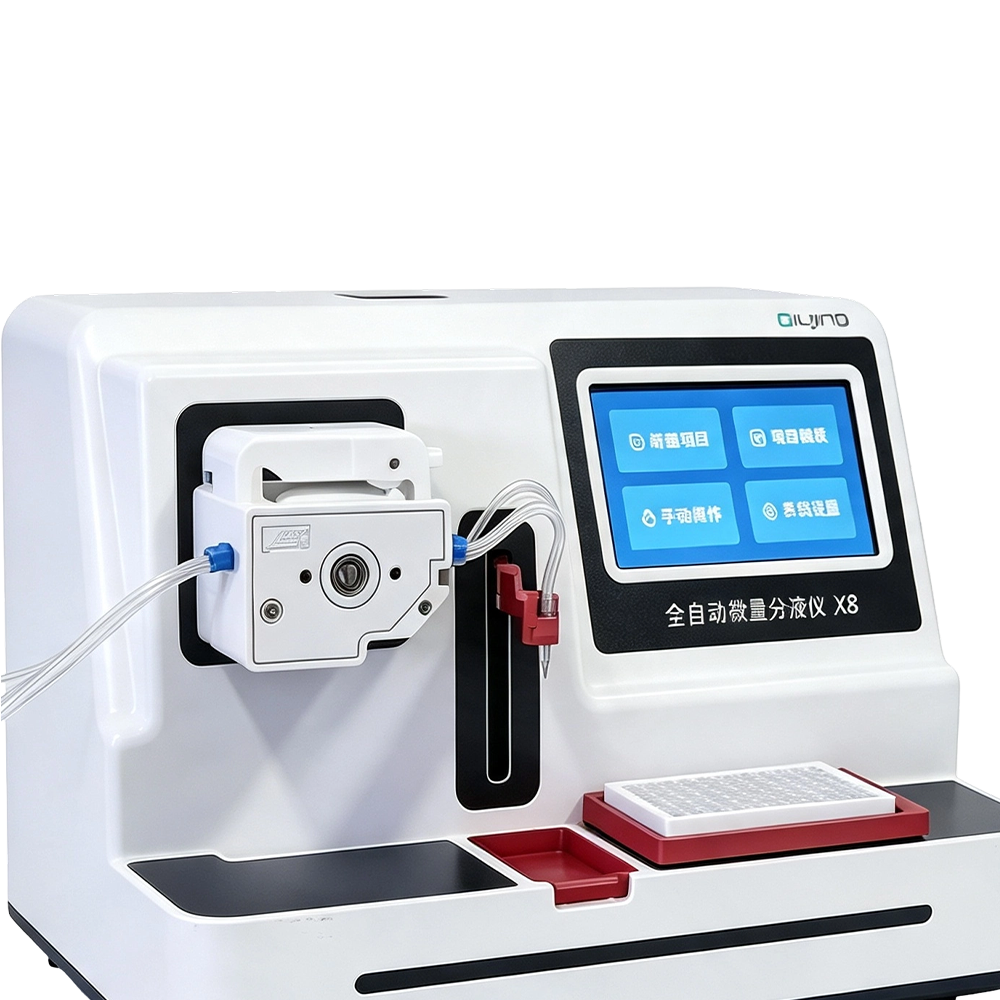 Qiujing X8 Automatic Micro Liquid Dispenser for 96-Well PlatesA fully automatic 8-channel dispenser for 96-well plates, offering non-contact peristaltic dispensing, touch-screen control, and ≤1.5% accuracy at 100 µL.View Product →
When you specify, ask for the accuracy and precision statement at the volumes you actually sell, not at nominal capacity, and confirm tip compatibility and channel spacing against the plates your customers use.
Application Fit: Food Safety, Environmental Monitoring and ELISA
Distributors are not buying a box; they are buying a defined application. Instrument families that already ship with food safety testing, environmental monitoring or enzyme-linked immunosorbent assay workflows are easier to place, because the end user's question — will it run my test? — is answered in the catalog rather than in a custom project.
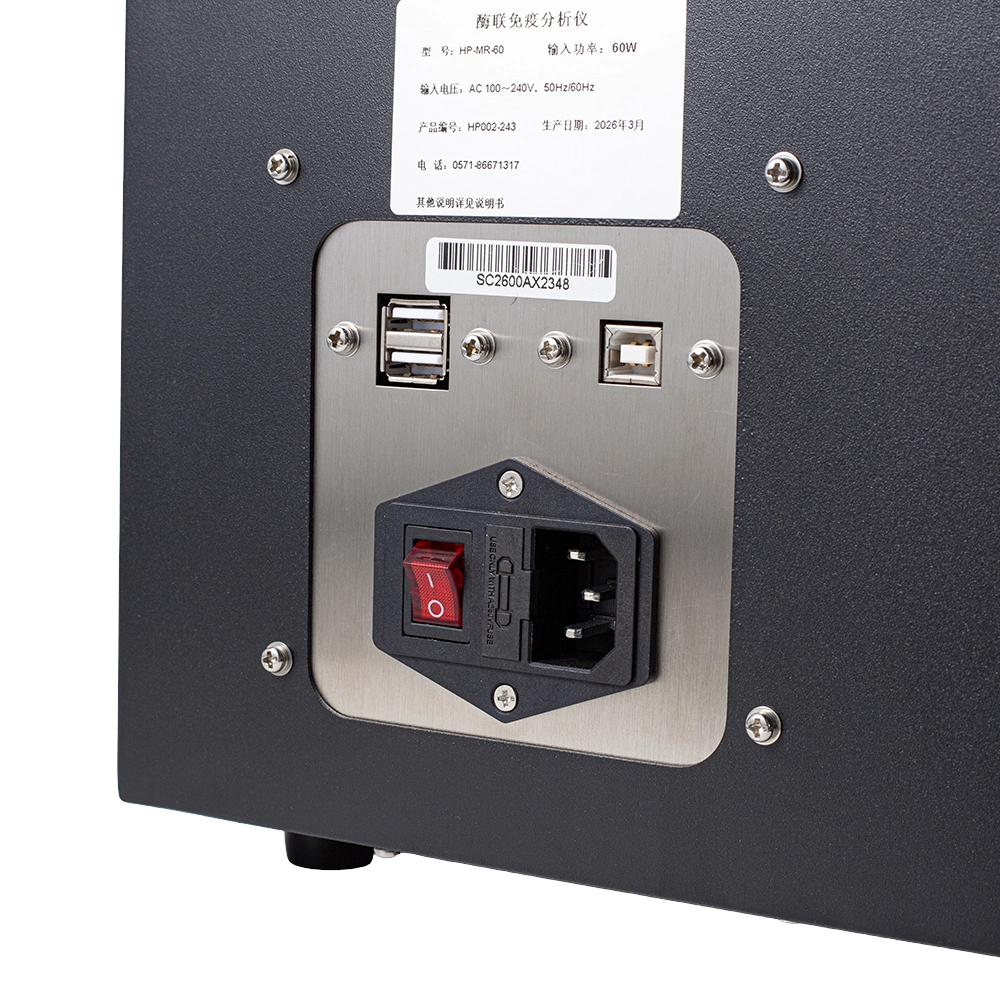 Qiujing QJ-MR-60 Touch Screen ELISA AnalyzerA benchtop ELISA analyzer with a 340–750 nm filter wheel and touch-screen control, suited to food safety, environmental monitoring, and life science workflows.View Product →
Portfolio breadth matters here too. When instruments, consumables and accessories are designed as one set — as in the laboratory solutions built around different workflows — a distributor can quote a complete bench, support it through a single spare-parts relationship, and train a sales team on one portfolio instead of five.
A Distributor's Checklist Before Signing
- Design ownership: who wrote the specification and who holds the drawings?
- Measurement-critical components: made in-house or bought in, and single-sourced or not?
- Quality documentation: ISO 13485 scope, CE marking, batch traceability, non-conformance process.
- Customization tier: cosmetic, functional or method-level, with written acceptance criteria.
- Sample-to-production consistency: retained golden sample, agreed tolerances, defined drift limits.
- After-sales engineering: a named contact, an escalation path, response times and spare-parts availability.
- Commercial terms: MOQ, lead time, packaging, payment, territory and private-label rights.
- Market compliance: label language, import documentation and safety test reports for your destination.
Frequently Asked Questions
What is the difference between OEM and ODM analytical instruments?
OEM means the instrument is built to the buyer's specification, and the buyer normally carries the design and validation responsibility. ODM means the buyer takes the manufacturer's existing platform and adapts branding, language and packaging, so the design and much of the certification stay with the manufacturer.
How long does an OEM programme take from sample to first shipment?
Cosmetic-only changes can move in weeks. Functional changes — optics, resolution, firmware, sample format — typically take months, because the instrument must be re-validated and retained samples approved. Plan validation before the volume order; do not accept "same as sample" as a substitute for a written specification.
Which tolerances should be written into the contract?
Specify them at the point of use: wavelength accuracy and repeatability, photometric accuracy, pipetting accuracy and precision at stated volumes, and temperature stability at the set point. A clause that says the goods meet catalog specification is not a tolerance clause, and it is difficult to enforce.
Can certification documents be issued in the distributor's brand name?
It depends on where design ownership and the quality system sit. Where the manufacturer holds ISO 13485 certification and builds to the buyer's drawings, test records and conformity documents are usually easier to issue under a private label.
Most sourcing failures trace back to a partner that assembles rather than designs, or to a quality file that exists only for the first order. Shanghai Qiujing has been building precision micropipettes and laboratory instruments since its brand was established in 1988, with the trademark registered in 1992, and works under CE and ISO 13485 certification.
You can read more about the company's manufacturing background and product history before you build a shortlist. Start with the four checks — R&D ownership, quality evidence, real customization depth and engineering access after delivery — and the commercial terms become the easy part of the conversation.

-
 +86-021-62403896
-

-
 roger@shqiujing.com.cn
-
Building 4, Lane 455, Zhuting Road, Yexie Town, Songjiang District, Shanghai, China
Copyright © Shanghai Qiujing Biochemical Reagent & Instrument Co., Ltd. All Rights Reserved. OEM/ODM Laboratory Equipment Manufacturer Laboratory Instruments Factory
